
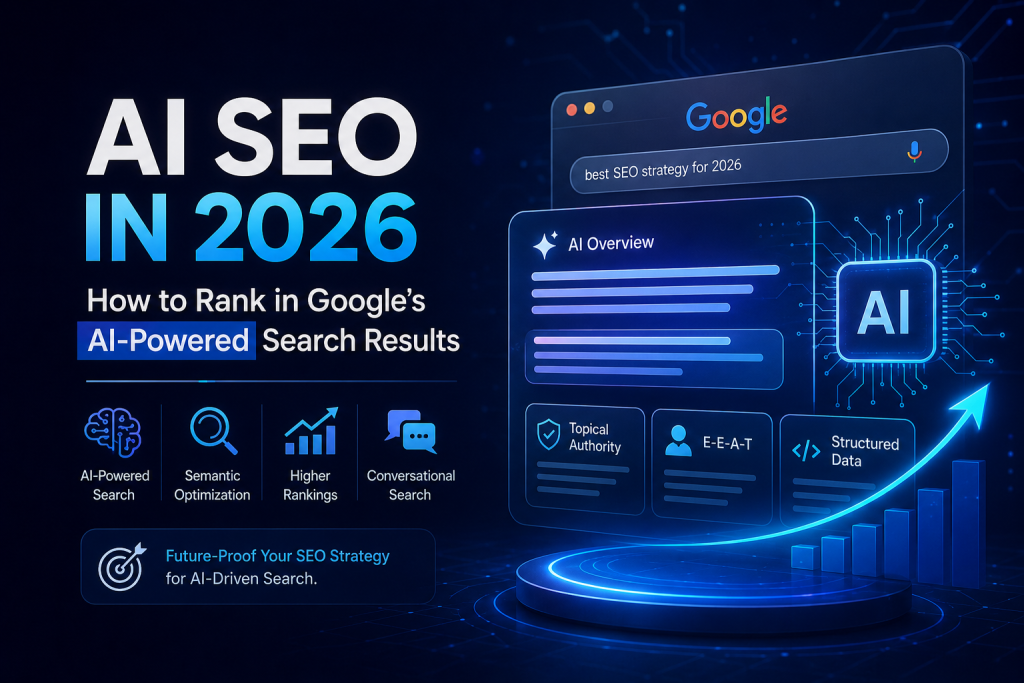
AI SEO in 2026: How to Rank in Google’s AI-Powered Search Results
Search engine optimization is evolving rapidly as Google continues integrating artificial intelligence into its search ecosystem. In 2026, businesses must adapt their SEO strategies for AI-driven search experiences, conversational queries, semantic indexing, and generative search engines.
Traditional SEO alone is no longer enough. Modern businesses need AI-focused SEO strategies that help websites appear in AI-generated answers, Google AI Overviews, and conversational search experiences.
Get Professional SEO Consultation Explore SEO Services
The rise of AI-generated search summaries, semantic ranking systems, and conversational search has transformed how users discover information online. Businesses now compete not only for traditional rankings but also for visibility inside Google’s AI-generated answers.
This shift introduces a new era known as AI SEO 2026 — a modern optimization strategy designed specifically for AI-powered search experiences.
Why Traditional SEO Alone No Longer Works
Traditional SEO strategies focused heavily on keyword targeting, backlinks, and technical optimization. While these elements still matter, Google’s AI search systems now analyze deeper contextual and semantic signals.
AI-driven search engines understand:
- User intent
- Conversational language
- Topic relationships
- Entity associations
- Search behavior patterns
- Content trustworthiness
Websites relying on outdated keyword stuffing techniques or thin AI-generated content are increasingly losing visibility in modern search environments.
Businesses investing in professional SEO services are better positioned to adapt to AI-powered search changes.
Understanding Google’s AI Search Experience
Google’s AI-powered search ecosystem uses machine learning and generative AI technologies to provide faster, smarter, and more conversational answers directly inside search results.
AI Search vs Traditional SERPs
Traditional search results displayed lists of blue links. Modern AI search experiences now include:
- AI-generated summaries
- Conversational responses
- Follow-up search suggestions
- Entity-based recommendations
- Semantic topic grouping
How AI Understands Search Intent
Google’s AI systems no longer focus solely on exact-match keywords. Instead, they analyze the purpose behind a search query and prioritize content that provides the most relevant and comprehensive answer.
Businesses should create content that directly addresses user questions, concerns, and search intent.
Semantic Authority & Entity SEO
Semantic SEO focuses on topical depth and entity relationships rather than isolated keyword targeting.
To improve semantic authority, businesses should create interconnected content clusters covering related topics such as:
- Technical SEO
- Structured data
- Content optimization
- Core Web Vitals
- AI-powered SEO strategy
Learn more about website optimization services and digital marketing strategies to improve AI search visibility.
Core AI SEO Ranking Factors in 2026
Businesses must understand the primary AI ranking factors influencing visibility in Google’s AI-generated search experiences.
E-E-A-T Signals
Google prioritizes Experience, Expertise, Authoritativeness, and Trustworthiness when evaluating content quality.
Topical Authority
Websites that comprehensively cover an entire niche perform significantly better in semantic search systems.
User Experience & Core Web Vitals
Fast-loading websites with strong user experience signals receive better rankings in both traditional and AI-driven search environments.
Improve your website performance with Core Web Vitals optimization .
Structured Data & Schema Markup
Schema markup helps Google better understand content relationships, entities, and page context.
- FAQ Schema
- Article Schema
- Organization Schema
- Local Business Schema
- Breadcrumb Schema
How Businesses Can Optimize for AI Search
Conversational Content Formatting
Businesses should structure content naturally using conversational language, direct answers, and question-based headings.
FAQ & Entity Optimization
FAQ sections improve AI extraction opportunities and help websites rank for conversational search queries.
What is AI SEO?
AI SEO refers to optimizing websites for AI-powered search engines, generative search systems, and conversational search experiences.
How does Google AI search work?
Google AI search uses machine learning, semantic indexing, and generative AI models to understand intent and generate contextual answers.
Why is semantic SEO important?
Semantic SEO helps search engines understand relationships between topics, entities, and content relevance.
Internal Linking Clusters
Internal links help Google understand website structure and topic relationships.
Recommended internal linking anchors:
Structured Data & Schema
Proper schema implementation increases visibility in AI-generated search results and enhances semantic clarity.
Common AI SEO Mistakes to Avoid
- Publishing thin AI-generated content
- Keyword stuffing
- Ignoring technical SEO
- Duplicate content creation
- Poor mobile optimization
- Missing schema markup
Businesses that avoid these mistakes are more likely to succeed in Google’s AI-powered search ecosystem.
Prepare Your Business for the Future of Search
AI-driven search is reshaping SEO rapidly. Businesses that adapt early will gain a major competitive advantage in search visibility, organic traffic, and online authority.
DGTECH provides advanced AI-focused SEO strategies designed for modern Google search experiences.